Out Now
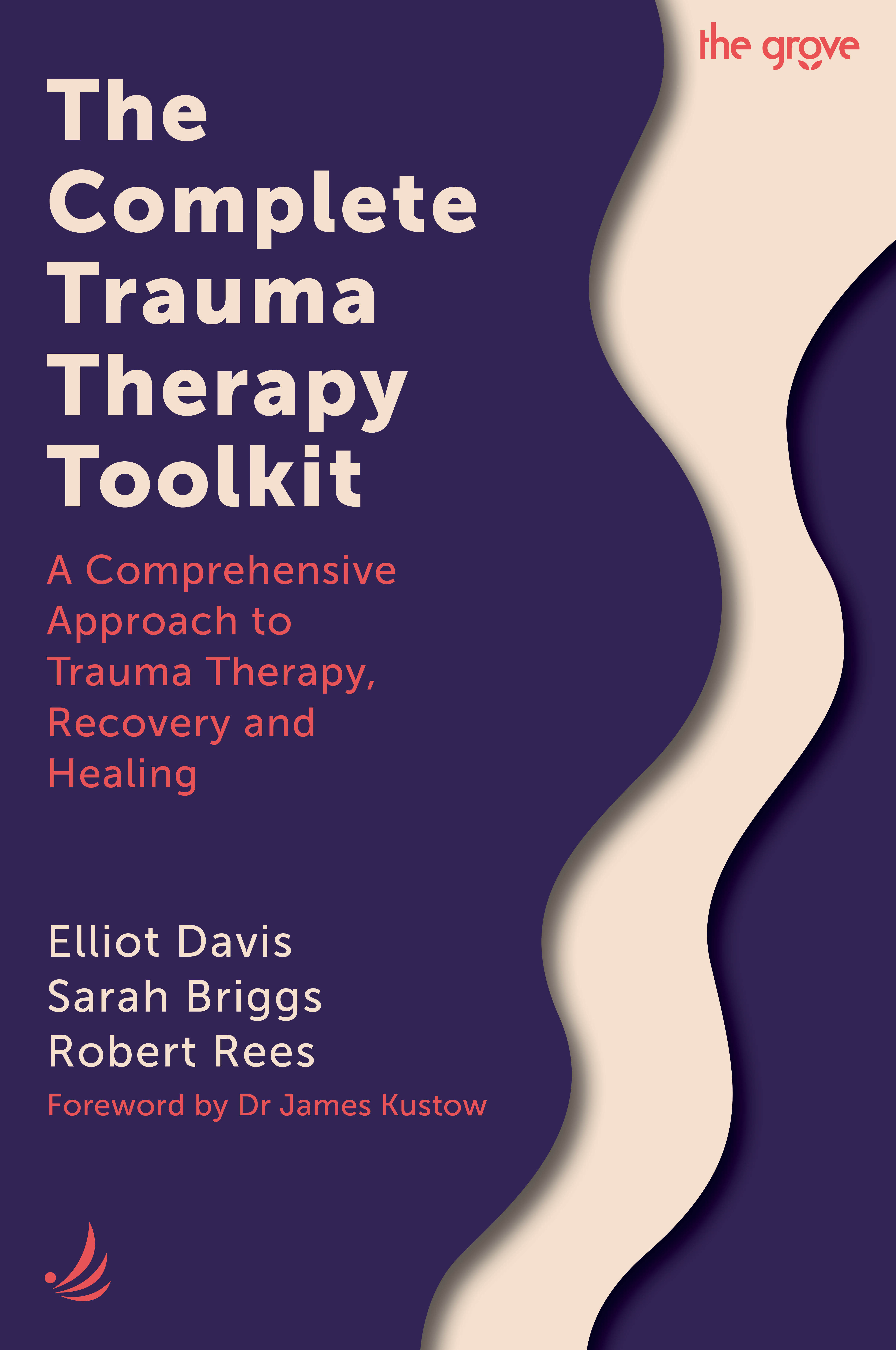
The Complete Trauma Therapy Toolkit: A comprehensive approach to trauma therapy, recovery and healing
by Elliot Davis, Sarah Briggs and Robert Rees with a foreword from Dr James Kustow
Trauma rarely announces itself. It arrives disguised as anxiety, perfectionism, addiction, emotional shutdown, chronic self-criticism, fractured relationships, or a persistent, nameless sense that something is deeply wrong. Recognising it is only the beginning.
The Complete Trauma Therapy Toolkit is a comprehensive, clinically grounded guide for therapists who want to work with trauma skilfully, confidently and humanely. It weaves together contemporary trauma theory, clinical wisdom, real case material, and immediately applicable tools, giving practitioners not just knowledge, but the capacity to use it in the room, in the moment, when it counts.
Following the client journey through a tri-phasic model of treatment, the book covers the full arc of trauma therapy: assessment and formulation, safety and stabilisation, memory and imagery work, cognitive processing therapy, Internal Family Systems, somatic approaches, cultural considerations, behavioural change, post-traumatic growth, and therapeutic endings. Alongside every chapter are downloadable worksheets, handouts and practical resources designed for real clinical use.
Whether you are a seasoned trauma specialist or finding trauma increasingly present in your existing caseload, this is the book you will return to again and again: a trusted companion for difficult work, written by practitioners who know the realities of the therapy room from the inside.
What makes this book stand out is its combination of clinical knowledge and humanity. It offers therapists not simply techniques, but a way of thinking about trauma that is compassionate, flexible and grounded in the realities of the therapy room. A valuable resource for anyone seeking to deepen their understanding and practice of trauma-informed therapy.
Dr Graham Music
Read the introduction to The Complete Trauma Therapy Toolkit here.