Out Now
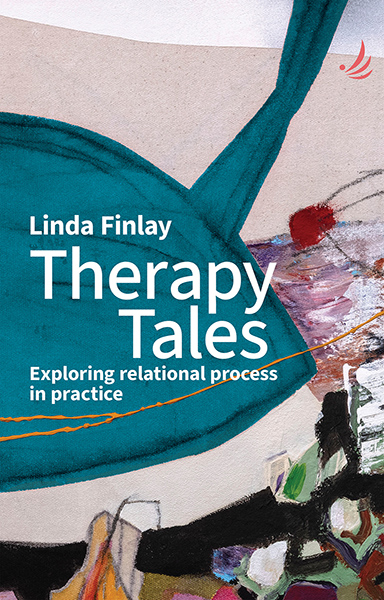
Therapeutic practice is becoming more explicitly ‘relational’ with many therapists describing themselves as being relational. But what does it actually mean? Therapy Tales draws on 13 evocative and thought-provoking clinical stories, which bring to life the relational nature of psychotherapeutic process and practice. Through these tales, Linda Finlay explores the therapeutic process in depth. She highlights how - behind apparently simple stories - therapy can be overwhelmingly intense, painful, puzzling, ambiguously inchoate, as well as nourishing. The synthesising discussions that follow each story are written specifically for therapists and trainees who are seeking to critically reflect on the experience of the therapeutic process, to build their evidence-based professional practice and to deepen their understanding of relational ethics. Throughout, the author foregrounds theoretical and practice debates around what effective relational therapy involves and how healing takes place.
The sheer fascination, depth, poignancy and power of what happens in the relational therapy space shines through each tale. The book emphasises how therapists work with complex human beings who have complex histories and that therapy processes are similarly layered. Demonstrating a wide range of approaches, readers will benefit from seeing how many concepts and practices are contested, and their applications depend on the therapist’s chosen approach/modality as well as the relational-social context..
Therapy Tales' by Linda Finlay provides a thoughtful and engaging account of relational psychotherapy in practice. Drawing on a series of carefully constructed clinical narratives, Finlay illustrates how therapeutic work unfolds within the shared space between client and therapist. The book pays close attention to process, highlighting both the client’s experience and the therapist’s reflexive engagement, including the role of supervision.
This is a hugely valuable and perfectly pitched contribution to our understanding of relational practice.
Professor Andrew Reeves, Emeritus Professor in Counselling Professions and Mental Health, University of Chester
The 13 tales engagingly (and often movingly) recounted by Linda Finlay focus on what happens 'between' clients and therapists in their encounters. Dr Finlay honestly and insightfully conveys the uncertain 'messiness' characteristic of relationally focused therapy.
Professor Ernesto Spinelli, author of Tales of Un-knowing: Therapeutic encounters from an existential perspective